Dementia and Sundowning at Home: How Calm, Structured Care Helps Families
Caring for a loved one with dementia or Alzheimer’s at home can be one of the most emotional challenges a family faces. Some days may feel manageable, while others may bring confusion, anxiety, wandering, agitation, or changes in behavior that are difficult to understand.
For many families, the goal is to keep a loved one safe and comfortable in familiar surroundings for as long as possible. Calm, structured dementia care can help support that goal by creating routines, reducing stress, and helping families respond with patience and confidence.
Why Routine Matters in Dementia Care
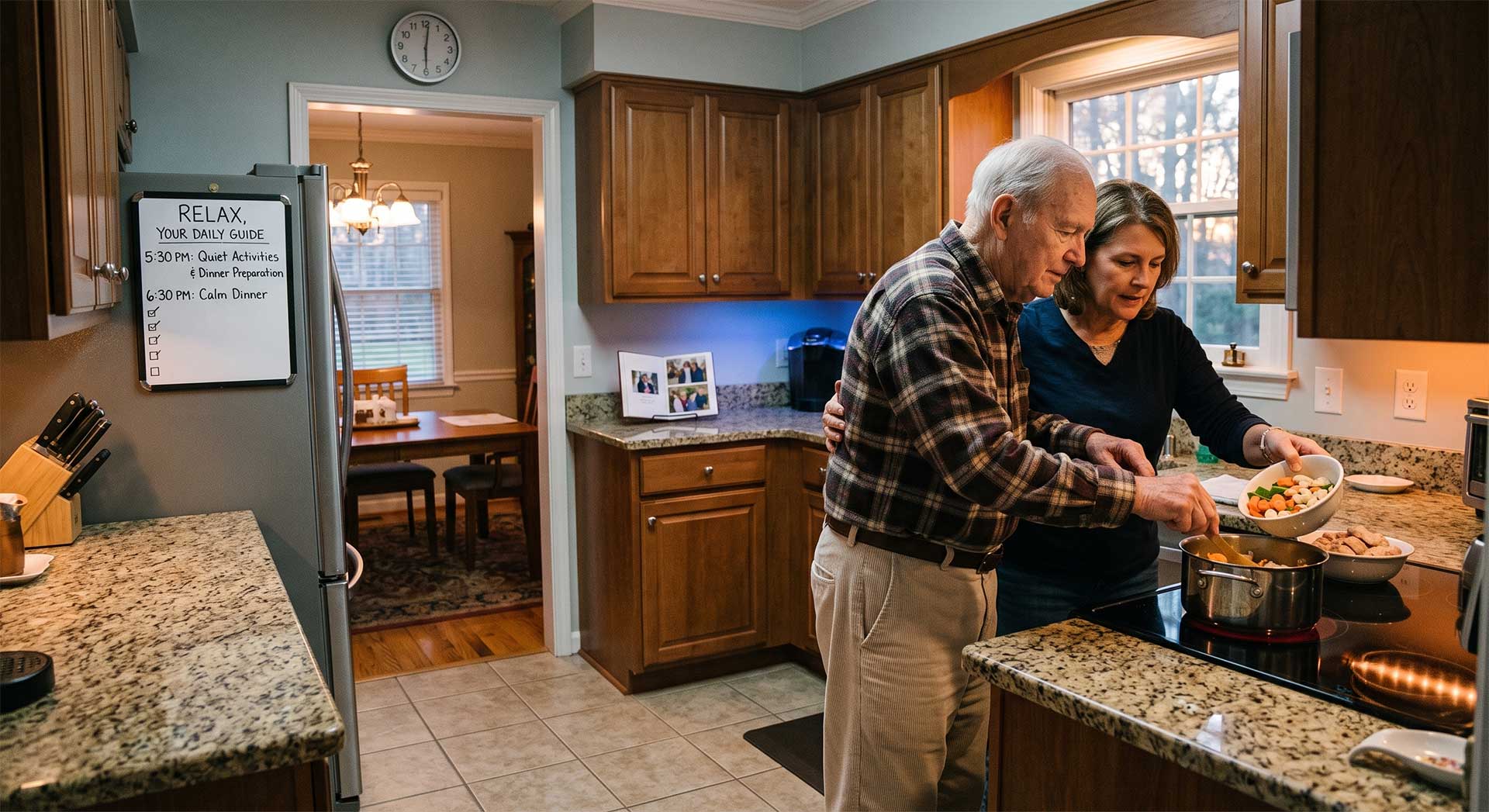
People living with dementia often do better when their days are predictable. Familiar routines can reduce confusion and help create a sense of security. Simple consistency around meals, hygiene, rest, activities, and bedtime may make the day feel less overwhelming.
When routines are disrupted, a person with dementia may become anxious, restless, or agitated. A caregiver who understands the importance of structure can help maintain a calmer environment and provide gentle reassurance throughout the day.
What Is Sundowning?
Sundowning refers to increased confusion, agitation, restlessness, or anxiety that often happens later in the day or early evening. It can be especially difficult for families because it may occur when everyone is already tired.
A loved one experiencing sundowning may pace, become upset, ask repeated questions, resist care, appear fearful, or have trouble settling down. These behaviors can be stressful for both the client and family members.
Common Sundowning Triggers
Sundowning can have many triggers. Fatigue, overstimulation, changes in lighting, hunger, dehydration, pain, unfamiliar surroundings, or disruptions in routine may all contribute. While not every trigger can be prevented, recognizing patterns can help families reduce the likelihood of distress.
A calm caregiver can help by keeping the environment peaceful, limiting late-day overstimulation, offering reassurance, supporting familiar routines, and helping redirect attention when confusion increases.
How In-Home Dementia Care Supports Families
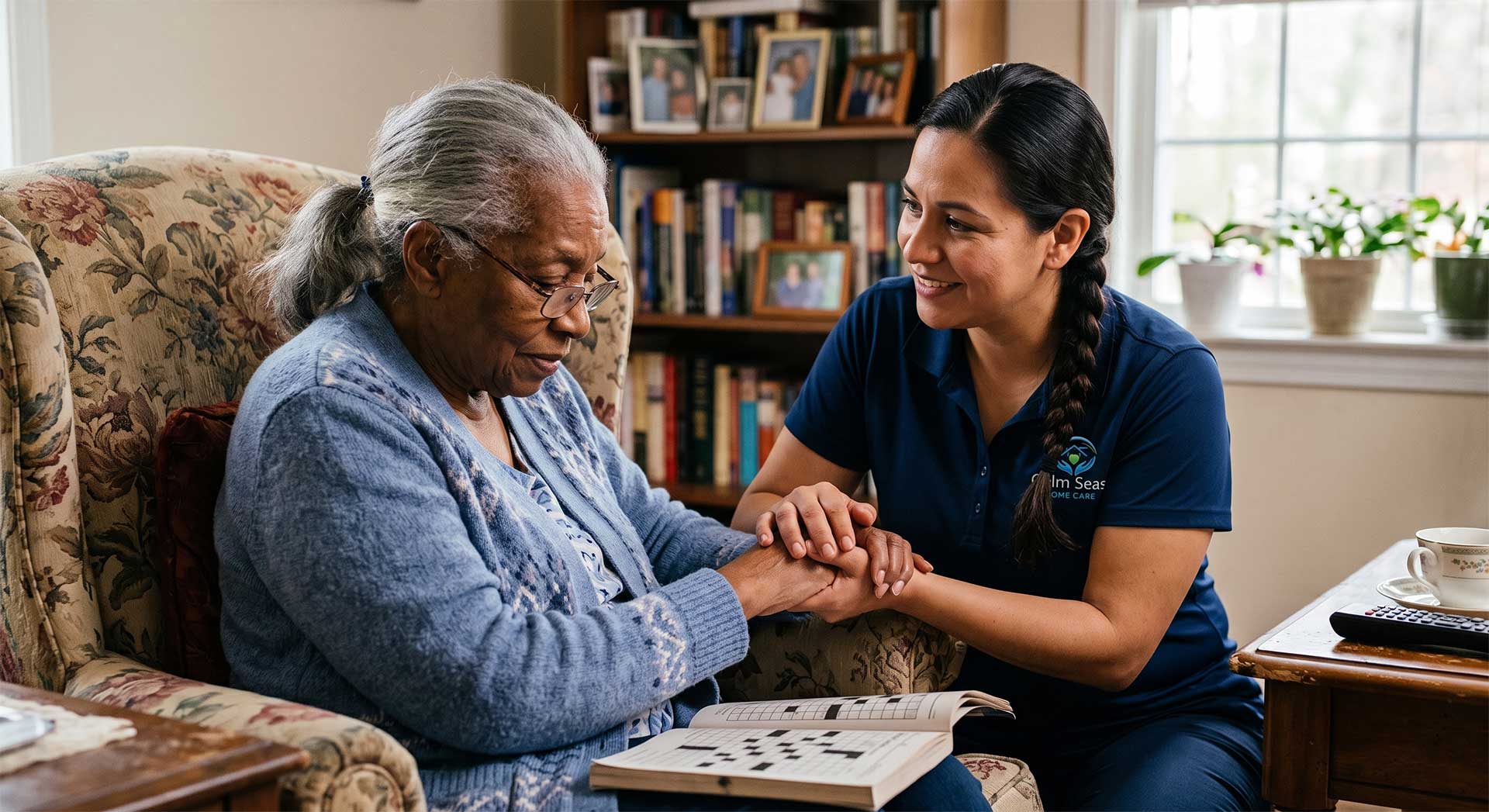
In-home dementia care can provide structure and support while allowing the loved one to remain in familiar surroundings. Care may include help with daily routines, meals, hygiene, dressing, mobility, safety supervision, companionship, and evening support.
A trained caregiver can also help families navigate difficult moments. Rather than arguing, correcting, or rushing, the caregiver can use gentle redirection, patience, and reassurance. This approach can help reduce stress and preserve dignity.
Family Guidance Is Part of the Care
Dementia affects the entire family. Family caregivers often feel guilt, exhaustion, worry, and uncertainty about whether they are doing the right thing. Support at home can help families feel less alone.
Calm Seas Home Care believes families deserve clear communication, practical guidance, and caregivers who understand the importance of patience, dignity, and trust.
Helping Loved Ones Feel Safe at Home
The home can provide comfort because it is familiar. However, dementia can change how a person interacts with that environment. Safety supervision may become more important over time, especially if there are concerns about wandering, falls, medication confusion, appliances, or nighttime restlessness.
A caregiver can help support safer routines while maintaining a respectful and compassionate presence.
Calm Seas Home Care Provides Compassionate Dementia Support
Calm Seas Home Care provides dementia and Alzheimer’s care designed around calm, structured, and compassionate support. Our approach focuses on routine, reassurance, safety, and family support.
Your loved one deserves care that sees the person behind the diagnosis. Calm Seas is here to provide comfort, structure, and steady support at home.
Activities of Daily Living Aging in Place Aging Loved One Alzheimer’s Care Appointment Assistance Calm Seas Home Care Caregiver Support Companion Care Companionship Care Complex Care at Home Dementia Care Dignity in Home Care Disability Home Care Elderly Companionship Equipment-Assisted Support Home Care Northeast Georgia Home Care Transportation Hoyer Lift Assistance In-Home Care In-Home Care Services In-Home Dementia Care Independent Living Support Memory Care at Home Mobility Assistance Northeast Georgia Home Care Personal Care Personal Care Support RN-Supervised Home Care Senior Care Senior Errands Senior Home Care Senior Transportation Sundowning Transportation Support
Frequently Asked Questions About Dementia Care and Sundowning
Caring for a loved one with dementia or Alzheimer’s can raise many questions for families. These answers can help explain how calm routines, structured support, and in-home dementia care may help loved ones feel safer and more secure at home.
What is sundowning in dementia care?
Sundowning refers to increased confusion, anxiety, restlessness, or agitation that often occurs later in the day or evening for some people living with dementia or Alzheimer’s. It can be stressful for families because it may happen when everyone is already tired.
What are common signs of sundowning?
Common signs may include pacing, repeated questions, anxiety, confusion, irritability, restlessness, fearfulness, resistance to care, or difficulty settling down in the evening. Every person is different, so symptoms may vary from day to day.
Why does sundowning happen later in the day?
Sundowning may be affected by fatigue, changes in lighting, overstimulation, hunger, dehydration, pain, unfamiliar surroundings, or disruptions in routine. While every trigger cannot always be prevented, recognizing patterns can help families respond more calmly and effectively.
How can in-home care help with sundowning?
In-home care can help by providing a calm presence during late-day hours, supporting familiar routines, reducing overstimulation, offering reassurance, and gently redirecting attention when confusion or agitation increases.
Why is routine important for someone with dementia?
Routine can help reduce confusion and anxiety by creating predictability. Familiar daily patterns around meals, hygiene, rest, activities, and bedtime may help a person with dementia feel more secure and comfortable at home.
How can caregivers support familiar routines?
Caregivers can help support familiar routines by assisting with meals, dressing, hygiene, activities, rest periods, evening transitions, and daily structure. Consistency can help reduce stress and make the day feel more manageable for the client and family.
Can dementia care be provided at home?
Yes. Many families choose in-home dementia care so their loved one can remain in familiar surroundings while receiving support with daily routines, companionship, safety supervision, redirection, personal care, meals, and family communication.
What does in-home dementia care include?
In-home dementia care may include structured routines, companionship, meal support, hygiene assistance, dressing assistance, mobility support, safety supervision, gentle redirection, evening support, and family guidance. The care plan should be based on the client’s needs and family priorities.
How does calm redirection help someone with dementia?
Calm redirection helps shift attention away from confusion, fear, or frustration without arguing or correcting harshly. A patient caregiver may use reassurance, familiar activities, conversation, or a change in environment to help reduce distress.
Should families argue or correct someone with dementia?
Arguing or repeatedly correcting someone with dementia can sometimes increase frustration or anxiety. A calmer approach often works better, using reassurance, validation, gentle redirection, and support that preserves dignity.
How can families reduce evening agitation?
Families may be able to reduce evening agitation by keeping routines consistent, limiting overstimulation late in the day, improving lighting, encouraging hydration and meals, reducing noise, creating a peaceful environment, and offering reassurance before confusion escalates.
Can companionship help someone with dementia?
Yes. Companionship can help reduce loneliness, provide reassurance, support engagement, and create a calmer daily rhythm. A familiar caregiver can offer conversation, activities, emotional support, and a steady presence throughout the day.
How does dementia care support the family?
Dementia care supports the family by providing dependable help, practical guidance, clear communication, and relief from managing care alone. Families often feel less overwhelmed when they have support from caregivers who understand patience, dignity, and trust.
When should a family consider dementia care at home?
A family may want to consider dementia care at home when a loved one is showing increased confusion, safety concerns, wandering, agitation, difficulty with daily routines, changes in hygiene, missed meals, or increased caregiver stress.
Can in-home dementia care help a loved one remain in familiar surroundings?
Yes. In-home dementia care can help loved ones remain in familiar surroundings while receiving support with daily routines, safety, companionship, personal care, and evening challenges such as sundowning.